
.png&w=1080&q=75)

.png&w=2048&q=75)
Explaining the Same Thing Twice or Three Times? — Why your team doesn't know what you're working on

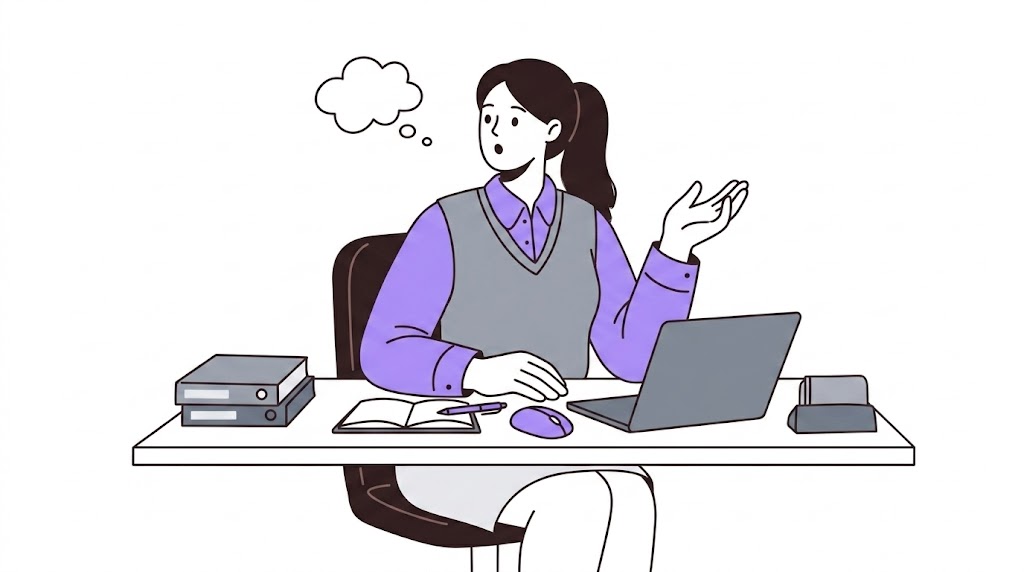
"Hey Pearl, what are you working on right now?" Someone on your team asks. You posted the update on Slack last week, you mentioned it in a meeting—but the person asking looks like they're hearing about it for the first time. You explain it again, a little awkwardly, and somewhere in the middle of that explanation a thought surfaces: maybe no one on the team actually knows, precisely, what you're working on right now.
Why isn't it landing?
The first answer that comes to mind is "I'm not communicating enough." But when you check, that's not it. You posted on Slack, you said it in the meeting, you sent a follow-up when things changed. It isn't that you haven't shared—it's that what you shared seems to have disappeared somewhere along the way. The second answer is "everyone's just too busy." Partly true. But "everyone's busy" is a constant condition, not a useful explanation. It's too broad to do anything with. The third answer is "our R&R isn't clear enough." That tracks—when responsibilities are blurry, "wait, who owns this?" follows. But even with the R&R lines drawn perfectly, the question of where that work is right now is a separate problem. Ownership and current status live in different dimensions. The fourth answer is "maybe reporting only captures a snapshot in time." This feels closest to the truth. The moment you report something, it's a single frame. A few days later it's blurry again, the in-between movement is invisible, and someone naturally ends up asking. The problem isn't the reporting itself. It's the gap that reporting alone can't fill. All four answers carry some truth. But none of them, alone or combined, gets solved by managing time better or redrawing R&R lines. The actual cause sits somewhere else.
When this builds up
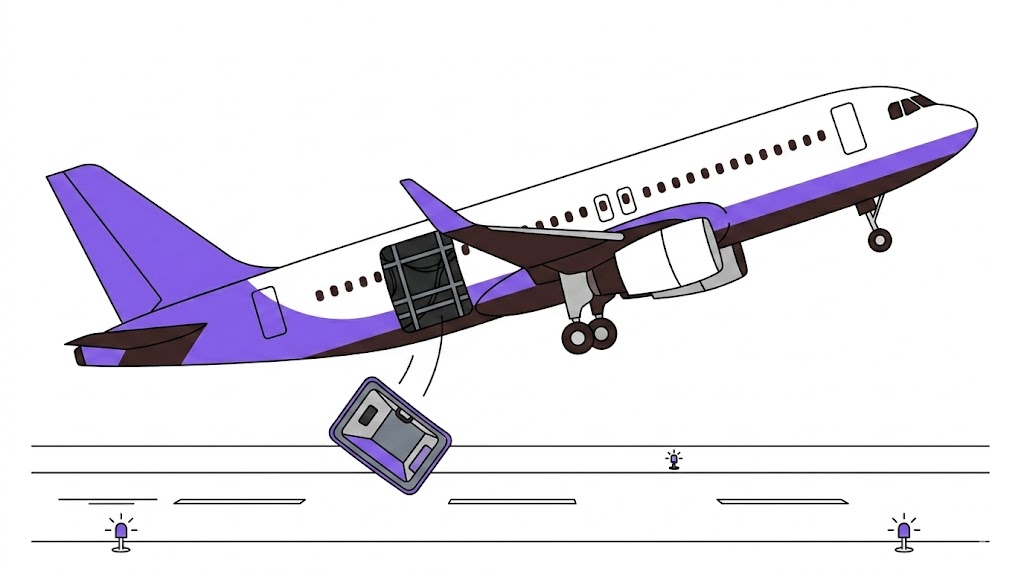
There's an extreme version of this pattern from the aviation industry that shows what happens when the haze accumulates. In January 2024, a Boeing 737 lost a panel the size of a person from the side of its fuselage, six minutes after takeoff. It was a door-shaped part that could also serve as an emergency exit, and it had left the factory without being properly secured. No one was killed, but it was a serious incident, and the U.S. transportation safety agency spent a year and a half tracing the cause. The cause wasn't a flaw in the aircraft. It was how people inside the factory worked together. Boeing had a dedicated team for handling that part, and the team had 24 people. But of those 24, only one was actually trained and experienced in removing and reinstalling that specific panel. And on the day that panel was closed, that one person wasn't at work. Someone else did the job, but no record was kept of who. Investigators searched for a year and a half and were never able to identify who actually performed the work. What happened upstream was similar. Workers at the supplier that made the part had noticed a small defect, decided it was "probably fine," and didn't flag it to Boeing. The Boeing technicians received the part not knowing the defect existed. The agency chair summarized the conclusion in a single sentence: "An accident like this never happens because of one person's mistake. It only happens when small gaps appear at many levels at once." The real problem wasn't one person's error. It was a structure in which no one could actually see what anyone else was doing. It's hard to hear about this without a thought surfacing. Who's the "one person" on our team? And maybe, on some piece of work, that one person is me.
The same pattern shows up in our teams
A panel obviously isn't going to fall off the side of our office. But look carefully and the same signals are there. There's work that stops when I'm not around. "Oh, that's been stuck because you weren't here." Small signals I've spotted don't flow up or sideways—I mentioned it in a meeting, but a few days later someone reacts like they're hearing it for the first time. Decisions I've made aren't recorded anywhere. "Who decided that, again?" comes back around months later. In a team, these don't show up as accidents. They show up as small moments. But all three signals share one thing: the information isn't living anywhere someone else could just look and see it. It's a structural problem, not a personal one—which is why neither more frequent reporting nor cleaner R&R fixes it.
So what can we do?

There are two angles worth working on: small things you can do yourself, and a question you can put back to the team. First, the small thing. Put what you've reported somewhere that doesn't evaporate. Not in a Slack DM or a verbal mention during a meeting, but in a channel or a page that anyone could look at. One line is enough. "X project, this week at step Y, waiting on Z." It doesn't need to be long. Once that habit accumulates, "where are we on this?" stops coming back as often. Second, share one full piece of what you carry with one other person. Think of it as the minimum insurance against your work freezing the moment you step away for a few days. Once that's in place, you'll find your own mind gets quieter, too. Knowing that things keep moving even when you're not there is probably the biggest source of peace you can give yourself. Then there's the question for the team. Is there a single place anyone can look to see who's doing what, at what stage? Is there a record of where decisions happened? If the answer is no, more meetings and more reporting won't fix it. There has to be somewhere the work is just visible. You can raise this casually with a manager, or pull together a small proposal with a few coworkers. "Someone knowing what I'm working on" isn't really about luck or someone else's attention. It's about an environment where the work just shows up where it lives. That environment can be something small you start on your own, or something you ask the team to build together.