
.png&w=1080&q=75)

.png&w=2048&q=75)
Is Finding Good Teammates Really Just Luck?

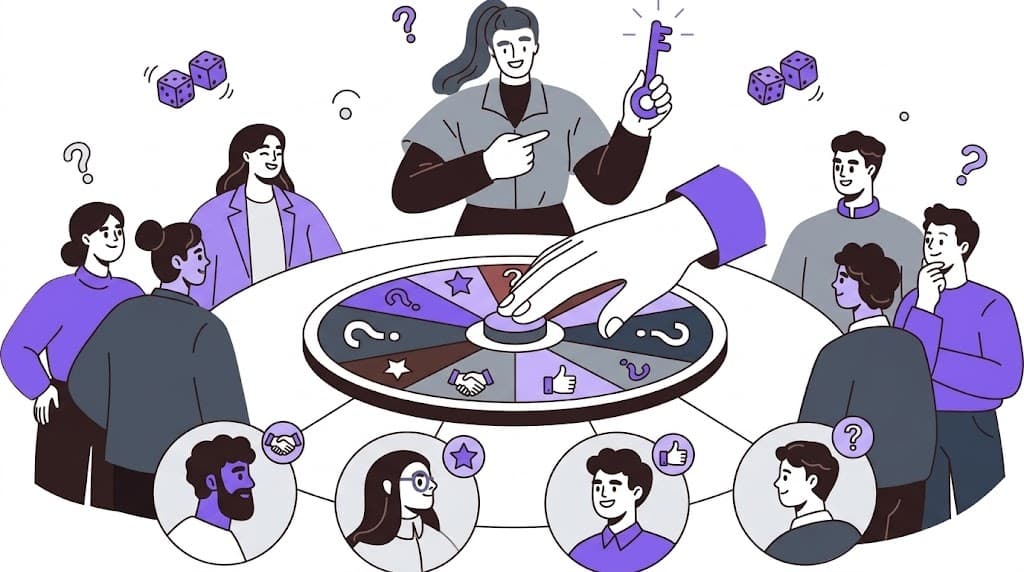
In February 2020, Disney announced its new CEO: Bob Chapek. A longtime Disney veteran, hand-picked as successor by Bob Iger — the legendary CEO who had led Disney for 15 years. The board approved unanimously. By any reasonable measure, this was a leadership decision made with about as much information as one can possibly have on a single person. About two years and nine months later, Chapek was fired. Iger came back as CEO, and would later publicly call his pick "the biggest regret of my career." The language people reached for to explain what went wrong is telling. "It wasn't a fit." "Different style." "The chemistry was off." Even someone who had worked alongside Chapek for decades could only describe the outcome in terms that sound suspiciously like luck. And if that's how it ends at the most carefully considered hire imaginable, what chance does the average two-interview decision really have? So maybe it's not a surprise that the word you hear most around hiring is "luck." Hiring managers say, "We just got unlucky with that one." Candidates say, "The chemistry just wasn't there in the interview." Team leads say, "Another bad hire — what are the odds?" Three different vantage points, all reaching for the same word.
Hiring is, structurally, design
Look at the process and the shape of design is right there. You define the role. You set evaluation criteria. You test through interviews and conversations. You decide. So why does it keep ending with "we just got unlucky"? The form of design is there. What's missing is the raw material to design with. We have remarkably little record of how a person actually works. Job title and dates fit neatly on a résumé. Everything past that — how they moved when things got tense, how they handled conflict, which decisions they shone in and which ones tripped them up — rarely makes it out of the company.
What doesn't fit on a single résumé line
The moment someone leaves a company, most of how they actually worked there leaves with them. What stays on the page looks like this: "Marketing Manager, ○○ Company, 2021–2024." What's inside that line is unknowable from the outside. One recent case stands out — an engineer who refused to let that happen. Vasilios Syrakis spent eight years at Atlassian, the Australian software company behind Jira and Confluence. When he was laid off in spring 2026, his response was a 38-minute YouTube video walking through everything he had built: every system he designed, every architectural decision he made, every piece of platform he left behind, organized chapter by chapter. If he hadn't sat down in front of that camera on his own dime, those eight years would have shown up to his next prospective employer as a single line: "Engineer at Atlassian, 8 years." The most important information disappears first. That's the structural reason hiring keeps feeling like a guessing game.
Why "luck" is such a comfortable word
When a hire doesn't work out, we say it was bad luck. The thing is — that word is convenient in a slightly suspicious way. It makes the outcome no one's fault. The hiring manager, the new hire, the team lead — under "bad luck," everyone becomes a powerless bystander. And the next round plays out exactly the same way. The real problem isn't that hiring depends on luck. It's that no one questions the structure that leaves us without the data to do better.
To stop relying on luck, two kinds of records need to accumulate
If hiring is going to become design rather than dice, how someone works has to stop evaporating and start accumulating as an asset. And that accumulation needs to happen along two tracks to give a real picture. First, the self-record. This is what an individual builds about their own way of working — their collaboration style, their strengths, their patterns. Assessments, diagnostics, and structured reflection all live here. Perplz's Work DNA falls in this category. When someone knows which of the eight work types best captures their collaboration DNA, they can explain themselves clearly — and the people considering them can see them more accurately. Second, the peer-record. This is what coworkers, managers, and collaborators observe and report. Self-knowledge always has blind spots; outside perspective is what fills them in. Right now this only exists informally — the back-channel reference check with a couple of people who happen to be in your network. For hiring to be design, peer feedback needs to accumulate as actual, structured data. When both tracks are present, you finally get to see the answer to the question that matters: what will it actually be like to work with this person on our team?
Beyond the single résumé line
Vasilios Syrakis sat down on his own and gave his eight years 38 minutes of structured explanation. Not everyone is going to do that. But the moment we have a structure where how-someone-works accumulates naturally — without anyone having to pay out of pocket for a YouTube video — hiring starts edging out of the territory of luck. And that's when "we just got unlucky" stops being the only thing anyone can say.