
.png&w=1080&q=75)

.png&w=2048&q=75)
The One Line AI Can't Write — What Your Teammates Saw

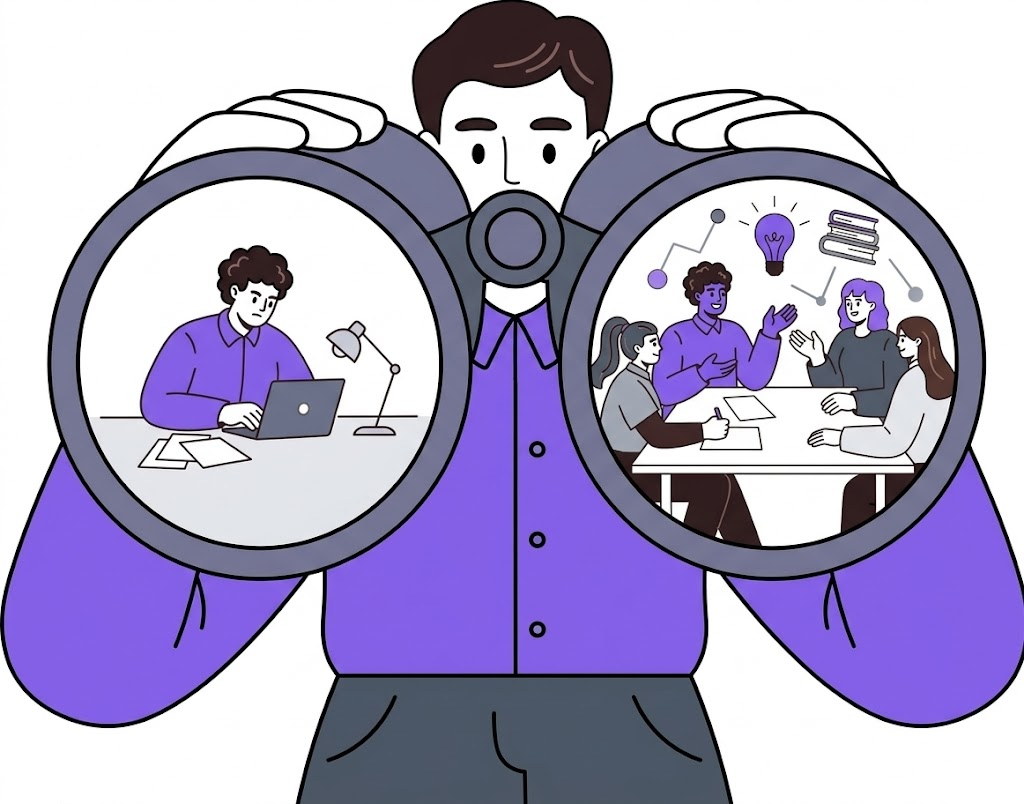
When you sit down to write your resume, you usually start with "what did I do?" Which projects you worked on, what outcomes you produced, what tools you used. But there's another piece of information recruiters care about just as much: "Who did this person work with, and how?"
Same accomplishment, two different angles:
"Iterated on the Figma prototype five times to lift usability scores by 23%." → evaluated as solo work
"Worked as a designer who brought two or three quick mocks plus a priority list into a decision where multiple directions were on the table, so the team could compare and commit." → evaluated as collaboration
Both belong on the same person's resume. But the second line is the one you can't really write about yourself.
What a Resume Actually Shows — Two Kinds of Experience
A resume captures two things at once.
What you've done — projects, internships, capstone work, side projects
Who you've worked with, and how — the same activities seen through the lens of collaboration
Parts 1 through 4 of this series focused mostly on the first kind. Quantified impact, process, differentiators — all tools for showing precisely what you did. Part 5 is about the second kind. And in a lot of ways, the second kind is the most important part of the whole series.
Why Recruiters Weight the evaluation
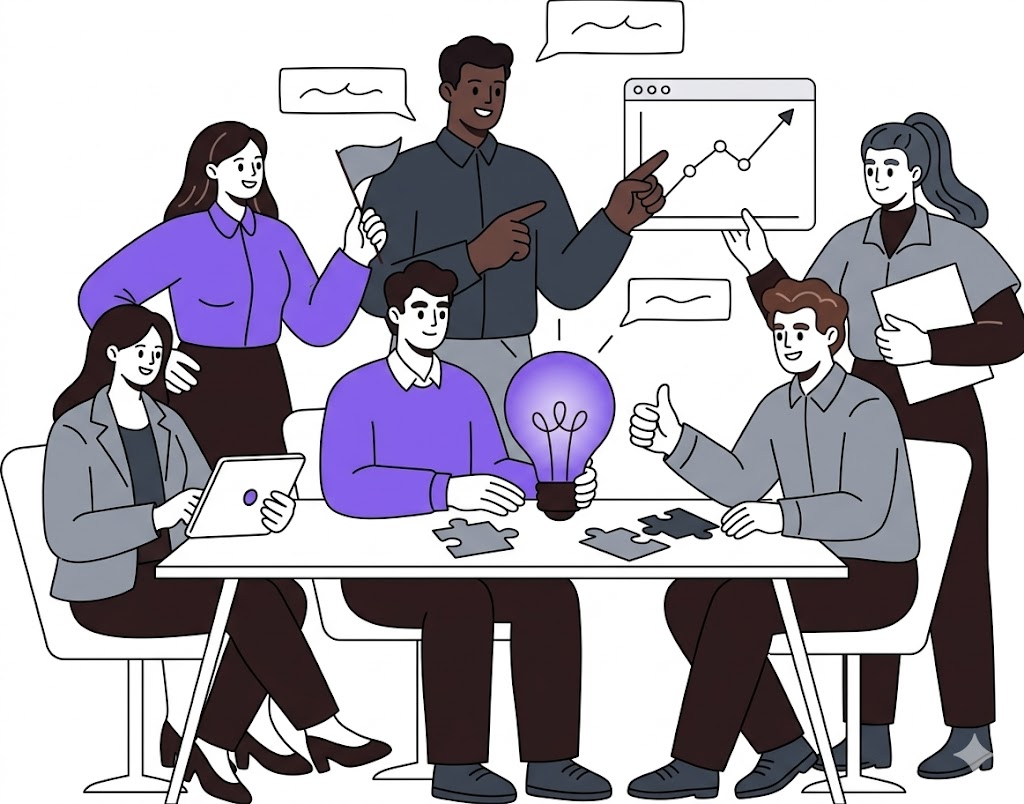
Hiring is, in the end, about choosing someone you'll work with. So recruiters look not just at what you've done, but at how you work. And that's information your own self-evaluation can't fully provide.
"Diligent," "detail-oriented," "great at collaboration" — these land softly when they come from you. The same words land much harder when they come from someone who's actually worked with you. The weight of credibility is different.
This is exactly the space that references fill. In the U.S. and U.K., a professional reference or recommendation letter has long been a standard part of the hiring picture — sometimes formally listed at the bottom of the resume, sometimes requested by the recruiter later in the process. According to a Robert Half survey, hiring managers contact references for the majority of finalist candidates. The credibility of a third party isn't optional; it's part of how recruiters validate a hire.
What's changing in 2026 is where that credibility shows up. Increasingly, hiring teams want to see it inside the resume itself — not deferred to a separate reference call after the offer stage.
What One Sentence From a Teammate Changes

Let's see how a resume reads when the sentence you can't write about yourself shows up. This series follows two fictional job seekers — Pearl Kim, a design student building hackathon products, and Jasper Brooks, a CS student with a Series A fintech internship.
Pearl Kim (Design) — Hackathon Project
Self-evaluation only
"I'm a designer who wants to be great at collaborating between PMs and engineers."
With a teammate's perspective added
"In a decision where multiple directions were on the table, she brought two or three quick mocks together with a priority list. She turned ideas that had only existed in our heads into something the team could compare and decide on." — Peer feedback from a hackathon teammate, project retro
Jasper Brooks (CS) — Series A Fintech Internship
Self-evaluation only
"I'm a backend engineer who wants to combine technical depth with strong collaboration."
With a teammate's perspective added
"He laid out hard technical decisions in a trade-off table so the team could converge on the same conclusion fast. The way he kept results on the rails inside tight deadlines really stood out." — Peer feedback from a senior engineer, end-of-internship review
Same people, but the second version is far more dimensional. Who Pearl and Jasper are when they're working with others fits into a single sentence. Pearl comes through as "someone who moves abstract conversation into prioritized visuals." Jasper comes through as "someone who pairs structure with deadlines." These identities surface most clearly through the eyes of someone who worked with them.
How to Actually Get Peer Feedback
You don't need a formal recommendation letter. The natural moment is when a project wraps.
Good moments to ask
— A capstone or side project retro
— Your last week of an internship, or the wrap-up conversation
— After a hackathon, student org project, or open source sprint
Ways to ask
— "I'm building up my portfolio and resume. Could you write two or three sentences about working together?"
— "What stood out to you about how I worked? Even one short comment would help."
And when you get a response, save it somewhere immediately. Feedback that lives only in a DM, an email reply, or a Slack thread is feedback you won't find when you need it.
How Perplz Resume Fills That Gap
Putting a teammate's perspective into your resume is a strong idea, but the execution is genuinely hard. Asking people is awkward. Storing the responses is messy. Translating those notes into resume-ready language is another step entirely.
Perplz Resume automates the flow:
— When a project wraps, your collaborators' feedback comes in naturally, in the same place you do the work
— AI analyzes that feedback to surface how you actually work — your communication patterns, problem-solving approach, the way you move through team decisions
— Your collaboration style maps to one of eight working types (Work DNA), giving recruiters an objective frame for the kind of teammate you are
For instance, Pearl's pattern — turning abstract discussions into prioritized visuals — reads as S (Strategist). Jasper's — pairing structure with deadlines — reads as B (Builder).
Perplz uses AI not as a content generator, but as an analyzer of collaboration. That's why the result looks fundamentally different from a resume you'd produce by handing ChatGPT a list of your bullet points.
But Where Do All These Records Live?
Peer feedback scattered across DMs, Slack, Notion, and email is feedback you can't pull together when you need it. The quantified metrics from Part 4 and the teammate perspectives from Part 5 collapse into the same underlying problem — where you store your own contributions while the work is still happening.
That's what Part 6 of this series is about. It's the final post, and it's the one that ties the whole series together.
Today's Takeaways
· A resume is a record of what you did, and of who you worked with and how.
· The second kind of record can't be built from self-evaluation alone. It needs a teammate's perspective.
· The sentence a teammate writes about you is the one AI can't generate.
· For entry-level candidates especially, the combination of small quantified metrics (Part 4) and teammate perspective (Part 5) is what makes a resume feel dimensional.
· Where to store all of this is the next problem. Part 6 handles it.
The Full Series
This series publishes one post a day, six days in a row.
· Part 1 (May 9, Sat) — 5 Traps Job Seekers Fall Into When Writing AI Resumes in 2026
· Part 2 (May 10, Sun) — The AI Resume Difference Recruiters Actually Recognize
· Part 3 (May 11, Mon) — The First Line That Decides Your Resume
· Part 4 (May 12, Tue) — You Don't Need Big Numbers
· Part 5 (May 13, Wed) — The One Line AI Can't Write ← this post
· Part 6 (May 14, Thu) — From Scattered Slack, Notion, and PDF Records to a Single Resume
Each part gets linked back to this page after it goes live.
One More Thing
Up next: From Scattered Slack, Notion, and PDF Records to a Single Resume (Part 6, May 14 Thursday — the series finale)
If you want to see a tool where collaborators' feedback gathers automatically, and AI analyzes how you actually work — find your team, build real projects together, and build a resume recruiters actually read.
Project records, peer feedback, and collaboration style — auto-assembled into a resume in about a minute. → [Try Perplz Resume]