
.png&w=1080&q=75)

.png&w=2048&q=75)
5 Traps Job Seekers Fall Into When Writing AI Resumes in 2026

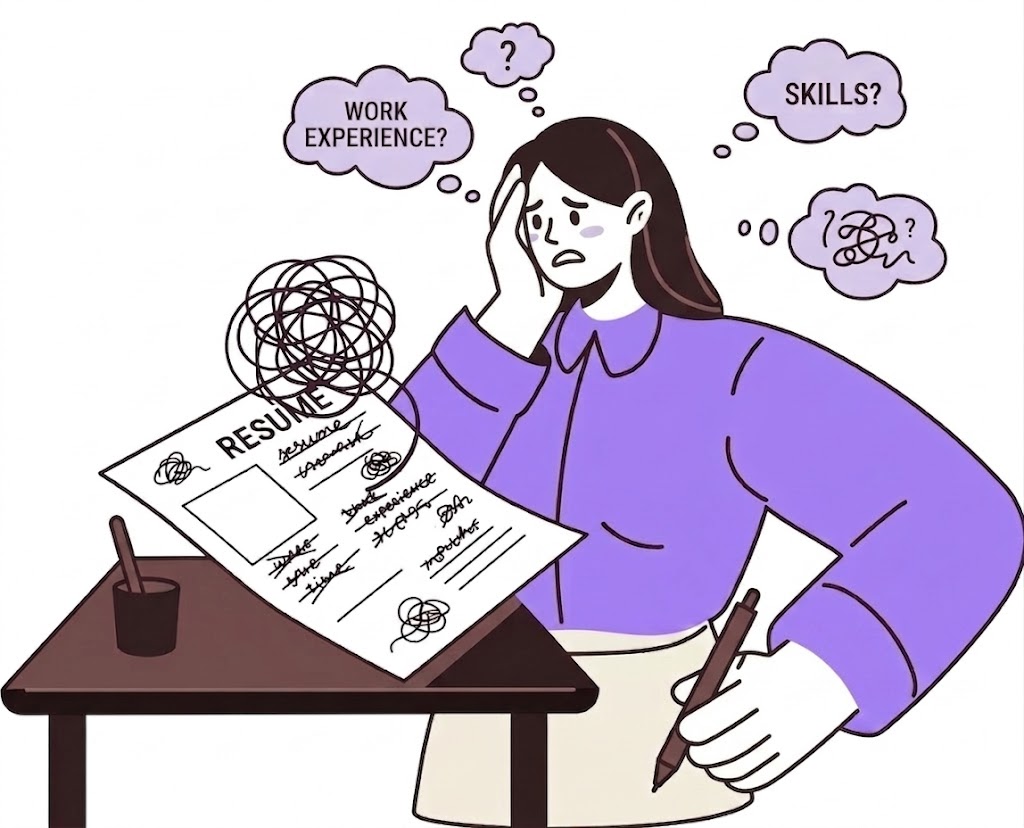
Pearl Kim and Jasper Brooks both started their resumes with ChatGPT. Pearl, a design student who's spent the last two years posting hackathon projects on Dribbble, is hunting for her first product design role. Jasper, a CS student with a few GitHub contributions and a Series A fintech internship under his belt, is targeting backend engineering positions at early-stage startups.
Both of them dropped their scattered notes into ChatGPT and had a clean, professional-looking resume in 30 minutes. Pearl ran hers through Grammarly for good measure. Jasper added a few keywords he saw in the job description.
Then they each sent a draft to an alumni mentor they'd connected with on LinkedIn — both recruiters at companies they were targeting. The response came back, almost word-for-word the same: "Hey, did you use AI to write this?" Neither of their resumes was going into the shortlist pile.
This isn't just Pearl and Jasper's story. AI has become the default for resume writing — and recruiters have caught up. Fast. According to a SHRM survey from early 2026, 43% of large employers now use automated AI detection tools as part of their hiring pipeline. Not informally. Built in. And 49% of hiring managers will auto-dismiss any resume they suspect was AI-written (Resume.io, n=3,000).
The detection rate is climbing every quarter. Resume Genius found that hiring professionals encountering AI-generated applications went from 53% in H1 2024 to 76% by H1 2026. By some estimates, 78% of job applications now contain AI-generated content.
The catch is that not using AI isn't the answer either. Roughly half of job seekers use AI to write or optimize their resumes (Resume Genius, 2025). For Gen Z, that number climbs higher. Skip AI and you fall behind on time. Use it badly and you get filtered out before a human ever sees your name.
This is Part 1 of a 6-day series. In this post, we'll lay out the five traps recruiters spot most often in AI-written resumes. Each one gets its own deep-dive in the following parts.
Five Traps Recruiters Spot in AI Resumes
Trap 1. Vague projects — missing details
AI can't invent details you didn't give it. Type "I worked on a team project" into ChatGPT and what comes back is "Participated in a cross-functional team initiative." That's exactly the line recruiters scroll past fastest.
Career site Enhancv puts it well in their AI resume detection guide: AI is fluent in abstract verbs like "spearheaded," "leveraged," and "optimized" — but it has no idea which tools you used, which specific obstacles you ran into, or which Slack thread the breakthrough came from. "Optimized supply chain efficiency" reads like a bot wrote it. "Resolved a 48-hour delay in our Shopify-ERP sync" reads like a human did.
This trap gets the full treatment in Part 2 — How AI Resumes Stay Out of the Reject Pile (publishing May 10, Sunday).
Trap 2. Everyone-sounds-the-same — the average-output problem
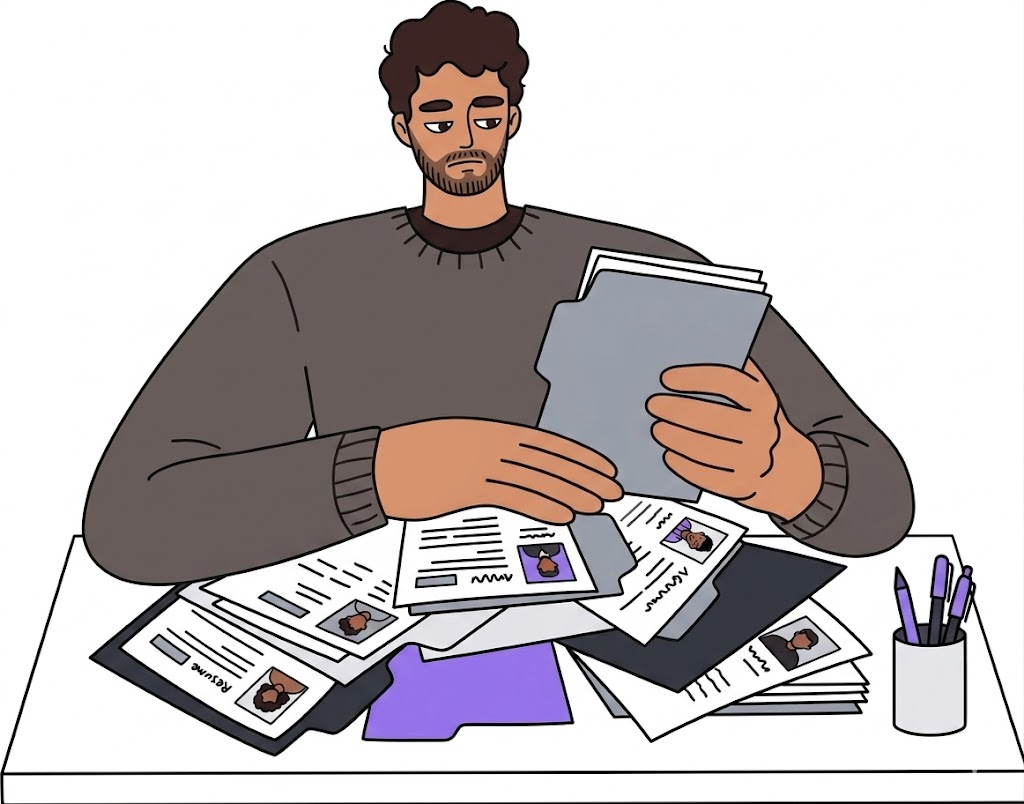
AI outputs the average of its training data. Ask it to "describe my strengths" and you'll get back "responsibility," "diligence," "passion," "results-driven." Recruiters see those exact words on dozens of resumes a day. ResumeBuilder found that 82% of companies now use AI to review resumes — which means the receiving side recognizes those clichés faster than ever.
When a resume looks like it was put together in five minutes by AI, it tells me the candidate didn't spend much time or thought on this application. AI is great for polishing what you've already written. But it's not a tool for generating the perfect resume from scratch.
— Michelle Reisdorf, District Director at Robert Half, in a CNBC Make It interview
This trap is the focus of Part 3 — How to Write a Career Story That Doesn't Sound Like Everyone Else's (publishing May 11, Monday).
Trap 3. Numbers and process — both missing
"Improved revenue" is weak. "Drove 15% YoY revenue growth" is strong. AI can't invent numbers you didn't give it. And there's an even more common problem: AI writes the result and skips the process. "Improved usability" might be on the page, but the actual story of who you interviewed, what pain points you discovered, and how you iterated to solve them? Gone.
Resume Now's 2025 survey found that 62% of hiring managers said they're likely to reject AI-written resumes that lack personalization. Same root cause. AI is fluent in generalities but can't fabricate the specificity of your actual experience.
We dig into this in Parts 2 and 3.
Trap 4. All self-evaluation, no outside perspective
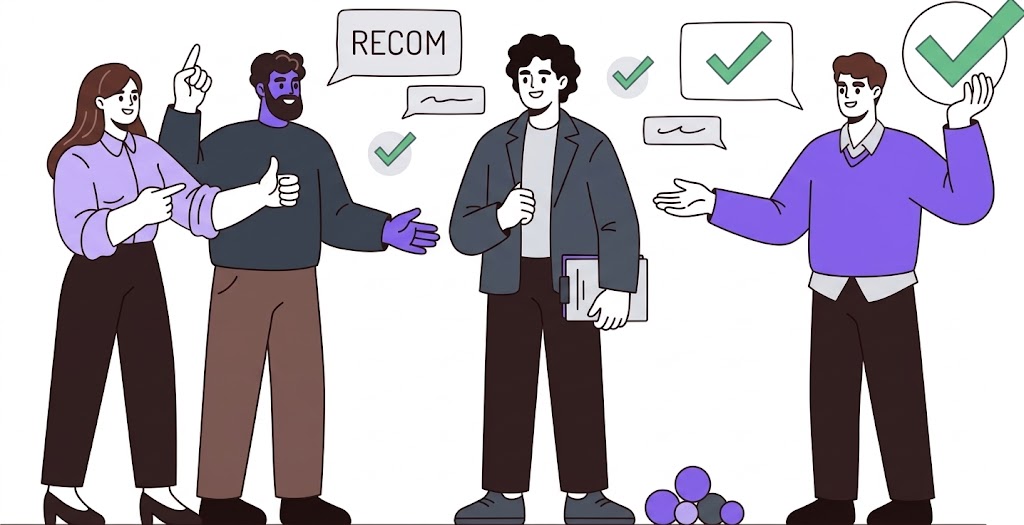
AI is fundamentally a self-evaluation polishing tool. It takes "things you said you're good at" and makes them sound nicer. But the information recruiters trust most is "what someone else says you're good at."
This isn't something you can prompt-engineer your way out of. It's a built-in limit of AI. AI can craft a plausible-sounding sentence about your strengths, but it can't generate what a teammate actually observed about how you work — the kind of detail that ends up in a recommendation letter or a peer review.
This is what we tackle in Part 5 — The One Line AI Can't Write: References Inside Your Resume (publishing May 13, Wednesday). It's the series' strongest argument.
Trap 5. Your materials aren't pulled together
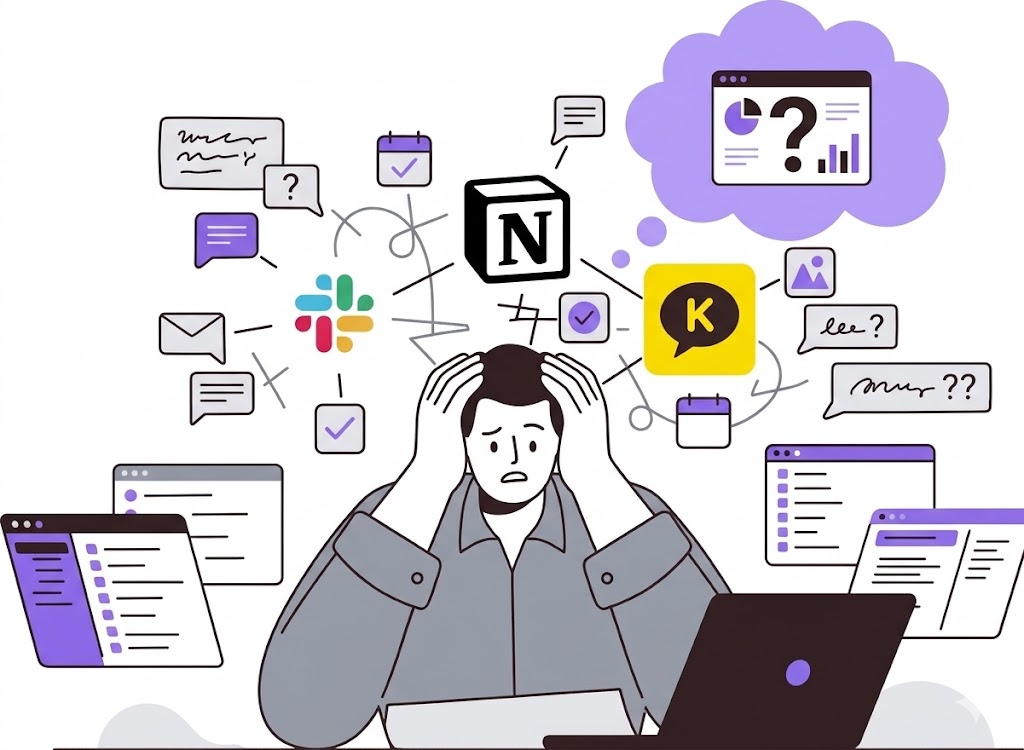
The last trap is the most practical. Your project notes live in Slack threads, Notion docs, Discord servers, and Linear tickets. Your portfolio is on Dribbble or GitHub. Your transcripts and certifications sit in a separate folder somewhere. Even if you dump everything into ChatGPT, the integration is rarely seamless — token limits cut things off, context gets lost, the model summarizes the wrong details.
Recruiters don't just read the content. They read the organization itself. A resume that doesn't pull its own sources together signals something about how you'll work on the job. The ability to consolidate is part of the signal.
This is the climax of the series — Part 6: From Scattered Slack, Notion, and PDF Records to a Single Resume (publishing May 14, Thursday).
AI Resumes Don't Get Rejected Because They're AI
Look at the five traps again and you'll see one thing they share. AI resumes don't get filtered because AI wrote them. They get filtered because the output reads like automation.
And here's the counterpoint worth holding onto: a 2023 NBER study of nearly half a million job seekers found that AI-assisted resumes increased hire rates by 7.8% (NBER WP 30886). AI helps when you use it well. The output divides on how you use it, not whether you use it.
So "don't use AI" is the wrong conclusion. The right question is how.
Two principles run through this entire series:
First — Treat AI as a material-organizing tool, not a writing tool
Use AI to sort experiences, polish phrasing, and pressure-test flow. But the unique details and quantified outcomes still have to come from you. AI can shape the raw material. It can't be the raw material.
Second — Cover what AI can't generate
Outside perspectives (peer feedback, recommendations) and material consolidation (across collaboration tools and external PDFs) — these can't come from AI alone. How you fill those gaps is what separates a resume that gets read from one that gets filtered before a human ever sees it.
The Real Cost of Getting This Wrong
One Reddit user learned this the hard way (documented in industry analyses of AI detection). They'd accepted a job offer, were three weeks from their start date, and got a call from HR: someone on the hiring team had "recognized AI writing patterns" in their cover letter. The company was reconsidering the offer.
That's the 2026 reality. AI detection happens at screening, but it can also happen after the offer. Pearl and Jasper aren't just trying to look good on paper — they're trying to build something that holds up.
The Full Series
This series publishes one post a day, six days in a row.
· Part 1 (May 9, Sat) — 5 Traps Job Seekers Fall Into When Writing AI Resumes in 2026 ← this post
· Part 2 (May 10, Sun) — How AI Resumes Stay Out of the Reject Pile
· Part 3 (May 11, Mon) — How to Write a Career Story That Doesn't Sound Like Everyone Else's
· Part 4 (May 12, Tue) — Quantifying Your Results: Numbers and Process on a Resume
· Part 5 (May 13, Wed) — The One Line AI Can't Write: References Inside Your Resume
· Part 6 (May 14, Thu) — From Scattered Slack, Notion, and PDF Records to a Single Resume
Each part gets linked back to this page after it goes live.
One More Thing
AI resumes aren't going anywhere. The question isn't whether to use AI — it's how. This series is about using AI well, and about filling in the parts AI can't reach.
By the end of these six posts, you'll feel the difference between an AI-written resume and an AI-assisted one — the way a recruiter feels it in the first seven seconds.
Up next: How AI Resumes Stay Out of the Reject Pile (Part 2, May 10 Sunday)
What if there were a tool that handled all five traps at once? Pearl and Jasper found one. Find your team, build real projects together, and build a resume recruiters actually read. → [Try Perplz Resume]